
 Login
Login nabanita
There is something interesting happening in AI right now.
Every few months, we hear about a new model.
It is faster.
It is smarter.
It can write better.
It can code better.
And after a few days, we get used to it.
But GPT-6 Astra feels different.
Not simply because it is another new model.
The bigger change is in what AI is becoming capable of doing.
OpenAI introduced GPT-6 Astra on September 3, 2026, describing it as its most intelligent and aligned model yet, with major advances in computer use, browsing, software engineering, science, cybersecurity and professional work.
And this is where things get really interesting.
Because AI is slowly moving from:
“Tell me how to do this.”
to:
“Do this for me.”
That difference may sound small.
It isn’t.
We have been using AI the wrong way
Think about how most of us use AI today.
We open ChatGPT.
We type something.
AI gives us an answer.
Then we copy that answer into another application.
We open Excel.
We search Google.
We create a document.
We make a presentation.
We send an email.
We check the information.
We correct mistakes.
We repeat the process.
In other words, AI may help with one part of the job, while the human still has to connect all the pieces.
GPT-6 Astra is designed to move further into that workflow.
OpenAI says Astra can use computers and browsers, fill online forms, update CRM records, organise calendars, conduct research, draft documents, analyse data, create websites and perform other multi-step tasks.
That’s a very different kind of AI assistant.
It isn’t just answering.
It is increasingly acting.
From chatbot to computer user
This may be one of the biggest changes to understand.
For years, the main interface for AI was a chat box.
You typed.
AI responded.
Now imagine giving an AI access to a computer.
You tell it what you want.
It can navigate a website.
Click buttons.
Read information.
Work with files.
Use software.
Check the result.
And continue with the next step.
That’s the direction Astra is taking.
OpenAI reports that Astra achieved a 72.6% score on OSWorld 2.0, a benchmark involving computer-use tasks, compared with 65.7% for GPT-5.6 Sol in its published comparison. OpenAI also reports that Astra completed those simulated tasks in roughly 40 minutes on average versus roughly 75 minutes for GPT-5.6 Sol.
Now, benchmark numbers don’t mean that Astra will magically handle every computer task perfectly.
Real life is much messier.
Websites change.
Files are badly formatted.
Instructions are incomplete.
People change their minds.
But the direction is clear:
AI is getting better at interacting with the digital world itself.
Imagine what this means for everyday work
Let’s take something very ordinary.
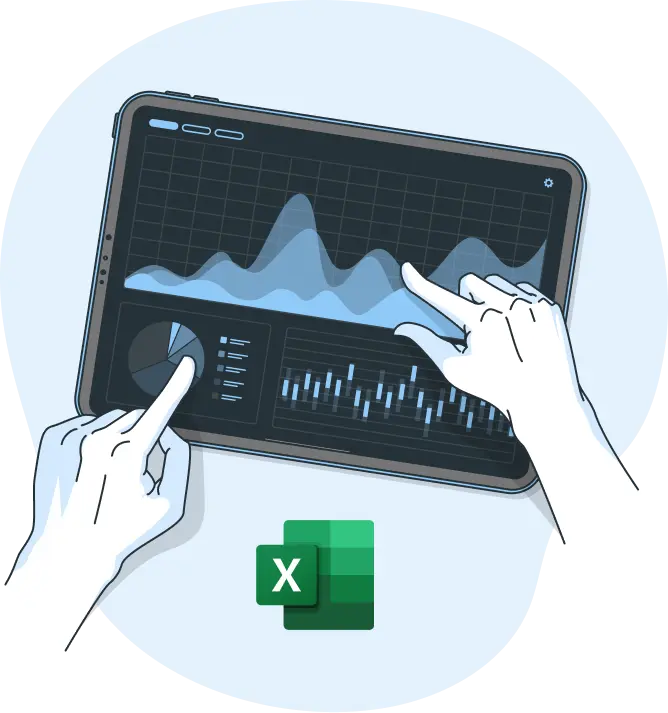
You receive a messy Excel file from your manager.
There are thousands of rows.
Some names are duplicated.
Dates are inconsistent.
There are missing values.
Some columns are formatted incorrectly.
And your manager says:
“Clean this up and give me a dashboard by this evening.”
Normally, that’s not one task.
It’s ten different tasks.
You have to inspect the data.
Clean it.
Transform it.
Create formulas.
Analyse it.
Build charts.
Design the dashboard.
Check the numbers.
Prepare the final presentation.
Now imagine an AI that can work across those steps.
OpenAI specifically highlights Astra working with spreadsheets, Power BI, documents, presentations and other professional workflows. It says Astra is trained to follow existing templates and styles and produce more immediately usable outputs.
That is where the value becomes much bigger than simply:
“AI can write an Excel formula.”
The real question becomes:
“Can AI help me go from raw information to a finished business outcome?”
That’s a much more powerful idea.
Astra doesn’t just generate. It can verify.
Here’s another part that caught my attention.
Creating something is one thing.
Checking whether it actually works is another.
Imagine asking AI to create a website.
A basic AI might generate the code.
A more capable system can create the website and then inspect it.
Does the button work?
Does the page load correctly?
Does the layout look right?
Is something broken?
OpenAI says Astra can create websites, web apps and games through Sites in ChatGPT, and can also run frontend quality checks on websites it builds.
That creates a very different workflow:
Idea → Build → Test → Fix → Improve
And AI can increasingly participate in the whole loop.
That’s important.
Because the future of AI isn’t only about generation.
It is about iteration.
And coding is getting a serious upgrade
Developers have already been using AI for coding for years.
But there is a major difference between:
“Write this function.”
and:
“Build this feature, test it, find what’s broken and fix it.”
OpenAI describes GPT-6 Astra as its strongest model for software engineering to date and reports state-of-the-art performance on several coding and agentic software-engineering evaluations.
It also introduces improved context preservation in Codex, allowing Astra to retain and retrieve information from earlier context windows during long coding sessions.
For developers, this matters because large software projects are rarely one-prompt jobs.
They involve:
Build.
Test.
Fail.
Debug.
Change.
Test again.
Repeat.
The better AI becomes at staying oriented throughout that process, the more useful it becomes as a real development partner.
But here’s something even more important: Astra can handle imperfect instructions
This might sound like a small feature.
It isn’t.
Humans rarely give perfect instructions.
We say:
“Make this more professional.”
“Clean this file.”
“Use the previous format.”
“Find something suitable.”
“Make the presentation look better.”
We assume the other person understands the context.
AI has traditionally struggled when instructions are incomplete.
OpenAI says Astra is better at using context to fill routine gaps, asking focused questions when a missing decision could materially affect the result, and continuing with sensible assumptions when appropriate.
That makes the interaction feel less like programming a machine.
And more like delegating work to an assistant.
That’s a major shift.
What if the task changes halfway through?
This happens constantly in real work.
You start with one request.
Then your manager says:
“Actually, add this.”
Then:
“Wait, don’t use that data.”
Then:
“Can you also prepare a short presentation?”
Then:
“Keep the original format.”
😂
A human understands that these are changes to the same overall task.
AI agents haven’t always handled this smoothly.
OpenAI says Astra is better at incorporating new requirements without losing track of the broader objective.
That may seem like a small improvement.
But when AI starts handling longer workflows, staying oriented becomes incredibly important.
The benchmark numbers are impressive — but don’t worship benchmarks
Astra’s launch comes with some very high benchmark results.
OpenAI reports a 98% score on FrontierMath Tier 4, 99.9% on ARC-AGI-3 and 100% on its ExploitBench evaluation.
Those numbers are impressive.
But there’s something we should remember.
A benchmark is a test.
It tells us how a model performed under a particular evaluation.
It doesn’t mean:
“The AI is 98% intelligent.”
It doesn’t mean:
“Every task will be 98% accurate.”
And it certainly doesn’t mean:
“Humans no longer need to check the result.”
Real-world work is unpredictable.
That’s why I think the more interesting Astra story isn’t any single benchmark.
It’s the combination of:
Reasoning + computer use + tools + context + execution.
That combination is what could change workflows.
Science is another area where this gets fascinating
AI has already become useful for scientific research.
But research isn’t simply about answering questions.
Scientists have to work with data.
Run analyses.
Inspect results.
Use specialised software.
Test hypotheses.
Compare evidence.
Decide what to investigate next.
OpenAI says Astra combines scientific reasoning with computer use, allowing it to work with specialised software, inspect scientific data and explore results.
That could make AI useful not just for explaining scientific concepts, but for helping with some of the practical work around discovery.
And that’s a very different role.
AI becomes less like a textbook.
More like a research assistant.
There is also a serious side to Astra
With greater capability comes greater responsibility.
This is especially visible in cybersecurity.
Before Astra’s release, OpenAI said the model had reached what it calls a Critical threshold for cybersecurity capability under its Preparedness Framework. The company said Astra could, with the right tools and access, identify previously unknown vulnerabilities and develop exploits without step-by-step human guidance.
That is impressive from a capability perspective.
But it is also exactly why safeguards matter.
OpenAI says it added stronger protections, including restrictions around advanced harmful cyber requests and additional monitoring.
This is an important reminder:
More capable AI isn’t automatically better in every situation.
The more powerful the system becomes, the more important it becomes to control what it can access, what it is allowed to do and when a human needs to approve an action.
So, will Astra replace people?
This is probably the question everyone will ask.
But I don’t think that’s the most useful question.
A better question is:
Which parts of our work will change because AI can now handle more of the execution?
Think about an analyst.
Maybe AI handles more data cleaning.
The analyst spends more time interpreting the result.
Think about a developer.
Maybe AI handles more repetitive coding and testing.
The developer spends more time on architecture and product decisions.
Think about a marketer.
Maybe AI handles more research, drafts and repetitive production.
The marketer spends more time on strategy and creative direction.
Think about a business owner.
Maybe AI can handle parts of research, reporting and administration.
The owner spends more time making decisions.
That’s not necessarily about humans disappearing.
It’s about the human job changing.
And this is where AI skills become important
This is the part I think many people are missing.
Learning AI isn’t just about learning how to write prompts.
It’s about learning how to work with AI.
You need to understand:
What should I delegate?
What context does AI need?
What should I verify?
What should AI never be allowed to do without approval?
How do I structure a workflow?
How do I connect AI to the tools I already use?
How do I judge whether the final result is actually good?
These are becoming practical workplace skills.
And you don’t necessarily need to be a programmer to benefit from them.
Someone working in Excel can use AI differently.
Someone working in Power BI can use AI differently.
Someone in HR can use AI differently.
Someone in marketing can use AI differently.
Someone running a small business can use AI differently.
The tools may be similar.
The workflows are not.
The biggest change may be the barrier between an idea and execution
Let’s say you have an idea for a small website.
Earlier, you might have needed:
A designer.
A developer.
A copywriter.
Someone for testing.
Maybe someone for research.
Now AI can increasingly help with several of those steps.
That doesn’t mean one AI has completely replaced an entire team.
But the barrier to getting started is becoming much lower.
And that’s powerful.
Because many ideas never become real—not because they’re bad ideas, but because the person doesn’t have enough time, technical knowledge or resources to execute them.
AI is changing that equation.
We are moving from prompting to delegating
This may be the biggest takeaway from GPT-6 Astra.
The first phase of generative AI was:
“Give me an answer.”
Then came:
“Help me create something.”
Now we’re moving toward:
“Handle this task.”
And eventually:
“Here is the goal. Work through the process and come back when it’s done.”
That’s delegation.
And delegation requires something more than intelligence.
It requires:
Context.
Judgement.
Tool use.
Memory.
Verification.
And boundaries.
That’s exactly why Astra’s computer-use and alignment improvements are so significant. OpenAI says the model is designed to better understand user intent, stay within task boundaries and make sensible decisions when instructions are incomplete.
But don’t make the mistake of blindly trusting it
This is important.
The more capable AI becomes, the easier it is to assume:
“It must be right.”
That’s dangerous.
AI can still misunderstand instructions.
It can still make incorrect assumptions.
It can still produce incorrect information.
And when an AI has access to tools, a mistake can potentially become an action.
That’s why human oversight isn’t becoming less important.
In some workflows, it may become more important.
The skill will be knowing:
When should I let AI continue?
and
When should I stop and check?
That distinction will matter enormously.
So, is GPT-6 Astra extraordinary?
If by extraordinary we mean perfect, no.
It isn’t.
But if we mean a meaningful step toward AI systems that can reason, use computers, work through multi-step tasks and produce finished outputs, then there is plenty here worth paying attention to.
OpenAI’s own launch material positions Astra across computer use, professional work, coding, science and other demanding areas, while independent reporting has also highlighted the significance of its computer-use and agentic capabilities.
And perhaps the most interesting part isn’t what Astra can do today.
It’s what people will build on top of it tomorrow.
The AI race is changing
For a long time, the question was:
“Which AI gives the smartest answer?”
Now another question is becoming important:
“Which AI can actually get the job done?”
That’s a completely different competition.
A model that writes a beautiful paragraph is useful.
A model that can understand the objective, research information, work with your files, use the right software, complete multiple steps, check its work and return a polished result is operating at a different level.
That is the direction Astra represents.
And here’s my biggest takeaway
Don’t look at GPT-6 Astra and think:
“Another AI model launched.”
Look at it and ask:
“Which parts of my daily work could eventually become a workflow that AI handles?”
Maybe it’s your weekly report.
Maybe it’s data cleaning.
Maybe it’s research.
Maybe it’s presentations.
Maybe it’s website testing.
Maybe it’s repetitive Excel work.
Maybe it’s the first draft of a business analysis.
Maybe it’s something you haven’t even thought of yet.
That is where the real opportunity is.
Because the biggest change in AI may not be that machines are becoming better at answering our questions.
It may be that machines are becoming better at turning our instructions into completed work.
And once that happens at scale, the way we think about productivity changes.
The way we learn skills changes.
The way businesses operate changes.
And even the way we define a “job” could gradually change.
One last thought
Every major AI release creates hype.
That part isn’t new.
But GPT-6 Astra gives us something more concrete to think about.
AI can now increasingly move through the digital world rather than simply talk about it.
It can reason.
It can use tools.
It can work with software.
It can handle longer workflows.
It can create and test things.
And it can operate with a greater focus on staying within the boundaries of the task.
We shouldn’t blindly believe every demo.
We shouldn’t assume every task can be automated.
And we definitely shouldn’t stop thinking for ourselves.
But we also shouldn’t ignore what is happening.
Because the most important AI skill of the next few years may not be:
“How do I use AI?”
It may be:
“How do I redesign my work now that AI can do more?”
That is the real conversation GPT-6 Astra has started.
And honestly…
that’s much more exciting than simply having a smarter chatbot. 🚀