
 Login
Login nabanita
IRA SKILLS | AI COMMUNITY
Let’s be honest.
When you hear that AI can write emails, analyze data, create presentations, generate images, write code and even have conversations with people, what is the first thought that comes to your mind?
For many people, it’s probably:
“Will AI take my job?”
It’s a fair question.
And it’s one that is becoming harder to ignore.
Recently, US Senator Bernie Sanders once again supported Bill Gates’ concerns about artificial intelligence. Sanders said that AI could pose a serious threat to jobs and potentially to the future of humanity.
His message was pretty strong:
“WE MUST ACT BEFORE IT’S TOO LATE.”
That’s a big statement.
But before we start imagining a future where robots take over every workplace, let’s take a step back and look at what is actually happening.
So, is AI really going to take our jobs?
Maybe some jobs will change.
Maybe some tasks will disappear.
And yes, some roles could eventually require fewer people.
But we’ve seen something similar happen before.
Think about computers.
When computers entered offices, many people were worried about what would happen to traditional jobs.
Then came the internet.
Then smartphones.
Every time, work changed.
Some jobs disappeared, but new jobs also appeared—jobs that didn’t even exist before.
AI could follow a similar pattern.
The difference this time is that AI isn’t only doing physical or repetitive work.
It’s entering areas that we traditionally thought required human thinking.
It can summarize a report.
It can analyze a spreadsheet.
It can draft an email.
It can create a presentation.
It can help write code.
It can research a topic.
And it can do many of these things in seconds.
That’s impressive.
But it’s also exactly why people are nervous.
Here’s where it gets interesting…
Maybe the question isn’t simply:
“Will AI replace humans?”
Maybe we should be asking:
“Which humans will know how to work with AI?”
Imagine two people doing the same job.
One spends three hours preparing a report manually.
The other uses AI and automation to get a first draft done in 30–45 minutes, then spends the extra time checking the information, improving the report and thinking about what the data actually means.
The AI hasn’t necessarily replaced that person.
It has made that person faster.
And that’s an important difference.
AI may become less about replacing every worker and more about changing what a worker is expected to do.
The person who knows how to use the technology may simply have an advantage.
But Bill Gates’ concerns go beyond jobs
And this is where the conversation becomes much bigger.
One concern is permanent job displacement.
If AI becomes good enough to handle more complicated work, some companies may need fewer people for certain tasks.
That could create real problems for workers.
People still have rent to pay.
Families still need healthcare.
People still need stable incomes.
So the question isn’t only:
“How powerful can AI become?”
It’s also:
“How do we make sure ordinary people aren’t left behind?”
That’s a conversation governments, companies and educators will have to take seriously.
Then there’s cybersecurity
Here’s another uncomfortable thought.
AI can be used to protect us.
But it can also be misused.
The same technology that helps a cybersecurity team identify suspicious activity could potentially help an attacker create more convincing scams or automate malicious activity.
So we’re going to have a strange situation where both sides are using AI.
The defenders will use it.
The attackers will use it.
And the technology will keep improving on both sides.
That’s why simply creating powerful AI isn’t enough.
We also need responsible use, security and safeguards.
And what about children?
This is probably one of the questions that doesn’t get enough attention.
AI isn’t just becoming a workplace tool.
It’s becoming something people can talk to.
You can ask it questions.
Tell it about your problems.
Have a conversation.
Ask for advice.
For adults, that can be useful.
But children are still learning how to understand relationships, emotions and the world around them.
So what happens if a child starts depending heavily on an AI companion?
Could it influence how they think?
Could they become too emotionally attached?
Could it change the way they interact with other people?
We don’t have all the answers.
And maybe that’s exactly why we should be discussing it now rather than waiting until the problems become obvious.
The bigger question: Who benefits from AI?
This is where Bernie Sanders’ argument becomes particularly interesting.
AI could make companies much more productive.
One person might be able to accomplish what previously took several people.
Businesses could save time and money.
But then comes the difficult question:
Who gets the benefit from all that extra productivity?
The company?
The employees?
The customers?
The wider economy?
That’s not something technology alone can answer.
It becomes a question about business, economics and society.
Some people believe AI will create huge numbers of new opportunities.
Others worry that the benefits could become concentrated among a relatively small number of powerful companies and individuals.
We simply don’t know yet how this will play out.
So, should we be afraid?
Honestly?
I don’t think fear is the most useful response.
Awareness is.
AI isn’t automatically good.
It isn’t automatically bad either.
It’s a tool.
And like every powerful tool, what matters is how we use it.
The internet gave us incredible opportunities.
It also gave us misinformation, scams, privacy problems and cybercrime.
AI could be similar.
It can help us work faster.
It can help students learn.
It can help businesses analyze information.
It can help people create things that once required expensive software or specialist skills.
But we also need to understand its limitations.
Because here’s something important:
AI can give you an answer. It doesn’t mean the answer is always right.
You still need to think.
You still need to check.
You still need to make the final decision.
And that’s where human skills become incredibly important.
What does all this mean for you?
This is probably the part that matters most.
You don’t need to become an AI engineer.
You don’t need to understand how an AI model is built.
But you should start asking:
“How can AI help me in my own work?”
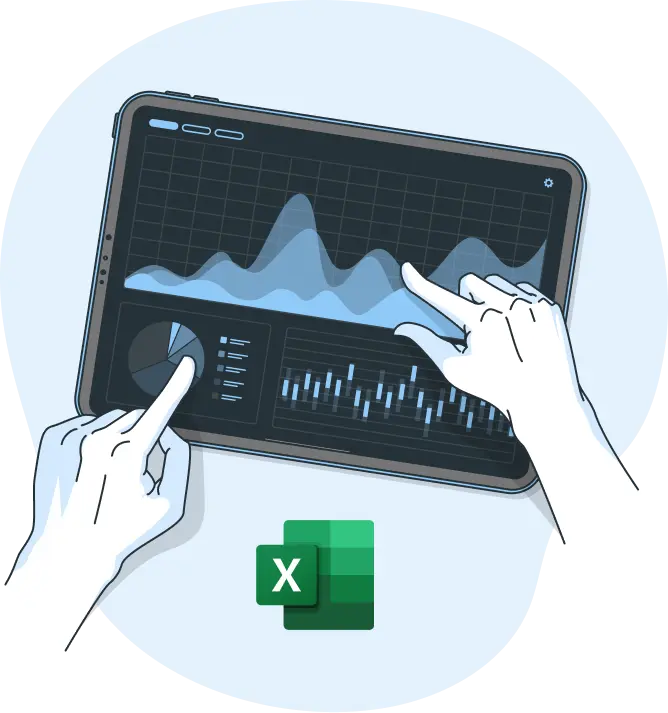
If you work with Excel or data, learn how AI can help you analyze information, automate repetitive tasks and create better reports.
If you’re in marketing, explore how AI can help with research and content.
If you’re in finance, understand how it can support analysis.
If you’re a student, use AI to understand difficult concepts and practice—not simply to copy answers.
And whatever your profession, don’t forget the skills that machines still struggle to replace:
Communication.
Critical thinking.
Creativity.
Problem-solving.
Decision-making.
Empathy.
These skills matter.
Maybe they will matter even more in an AI-powered workplace.
The future probably isn’t Humans vs AI
Maybe we’ve been looking at this the wrong way.
It doesn’t have to be:
Humans OR AI.
It could be:
Humans + AI.
A doctor using AI.
A teacher using AI.
An analyst using AI.
A marketer using AI.
A student using AI.
A business owner using AI.
The person still brings the judgment, experience and understanding.
The AI helps with the work.
And the combination can be powerful.
That’s why I don’t think the biggest advantage will come from simply knowing one AI tool.
Tools will change.
New tools will appear.
Today’s popular AI platform might not even be the most important one a few years from now.
The bigger skill is learning how to adapt.
🌍 One last thought
The discussion started with Bernie Sanders supporting Bill Gates’ warning about AI.
But perhaps the bigger lesson isn’t that we should be scared of AI.
It’s that we should pay attention.
Technology is moving quickly.
And if we wait until everything changes before we start learning, we may find ourselves trying to catch up.
But if we start learning now—even slowly—we have a much better chance of adapting.
So instead of only asking:
“Will AI take my job?”
Maybe ask yourself:
“What can I learn today that will make me better prepared for tomorrow?”
Because the AI era isn’t something that’s coming someday.
It’s already here.
The choice now is what we do with it.
Learn. Adapt. Stay curious. And keep your human thinking at the center. 🤖
💬 Let’s hear from you
Do you think AI will ultimately create more opportunities than it takes away?
Or are you genuinely worried about what AI could mean for jobs over the next 10 years?
Share your thoughts with the IRA SKILLS AI Community.